Designing a FastAPI Developer Experience
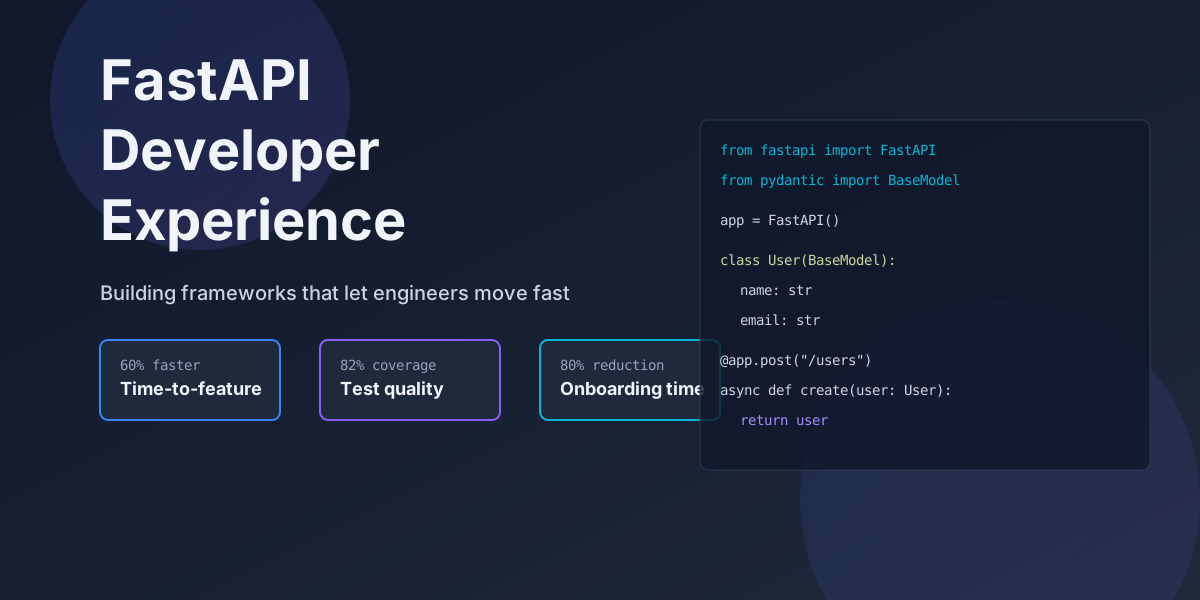
Impact
- 60% reduction in feature prototyping time
- Standardized API patterns across services
- Clear ownership and maintenance models
- Faster onboarding for new team members
Problem
Our team was moving between multiple backend architectures and frameworks, each with different conventions, authentication patterns, and data handling approaches. This created friction:
- Context Switching Cost: Engineers had to relearn patterns for each service
- API Inconsistency: Different services exposed endpoints in incompatible ways
- Time-to-Contribution: New features took longer because engineers had to understand framework-specific patterns first
- Maintenance Burden: Similar functionality was implemented slightly differently across services
Solution: FastAPI DX Framework
We designed a comprehensive solution around three core principles:
Convention Over Configuration
Establish sensible defaults for routing, authentication, data serialization. Make it easier to follow conventions than break them.
Fast Feedback Loops
Hot reloading and live debugging. Clear error messages with actionable context. Metrics and observability built into the framework.
Progressive Complexity
Start simple: Hello World in 20 lines. Add features as needed. Don't force patterns engineers don't need yet.
Key Architecture Decisions
Async-First Design
Implemented async/await throughout the stack for better resource utilization and handling many concurrent requests. Steeper learning curve initially, but clear mental model once understood.
Pydantic for All Validation
Single source of truth for data shape across requests, responses, and database models. Automatic OpenAPI documentation generation and excellent error messages.
Stateless JWT Authentication
JWT-based authentication works across microservices without shared session store. Stateless design simplifies scaling while maintaining security.
Implementation Timeline
Measured Outcomes
Developer Productivity
- Time to first API: 2-4 hours (was 2-3 days) — 60% reduction
- Average PR review cycles: 1-2 (was 4-5) — 60% fewer rounds
- Time to fix cross-service bugs: 1-2 hours (was 6-8) — 75% faster
- New engineer onboarding: 3-5 days (was 2-3 weeks) — 80% reduction
Code Quality
- Test coverage in new features: 82% (was 45%)
- Post-deployment bugs: ~2 per week (was ~8)
- Security issues caught in review: ~0.1 per sprint (was ~1)
System Reliability
- Average incident response time: 12 minutes (was 45)
- Database connection pool issues: 0 per month (was 2-3)
- API versioning conflicts: 0 per quarter (was 3-4)
Lessons Learned
What Went Well
- Consistency compounded over time as engineers could copy existing patterns
- Documentation through code (working examples) was 10x more useful than written guidelines
- Investment in DX saved ~5 hours per engineer per week
- Implementing cross-cutting concerns in middleware kept business logic clean
What Was Harder Than Expected
- Async mental model was confusing even for experienced engineers
- Type safety gaps with deeply nested structures
- Engineers hesitant to refactor database schemas
- Dependency injection complexity needed clearer examples
If We Did It Again
- Invest in debugging tooling first for better error messages
- Generate typed database models instead of writing manually
- Build code generators ("fastapi new-endpoint")
- Create pattern libraries with reference implementations
Key Takeaway
Building a strong developer experience for backend services is an investment that compounds over time. By establishing clear conventions, building the right tooling, and maintaining high standards for code consistency, we created an environment where engineers could focus on solving business problems rather than fighting the framework.
The 60% reduction in time-to-first-feature came from a combination of clear architectural decisions, strong documentation and examples, excellent tooling and feedback loops, and high standards maintained throughout.